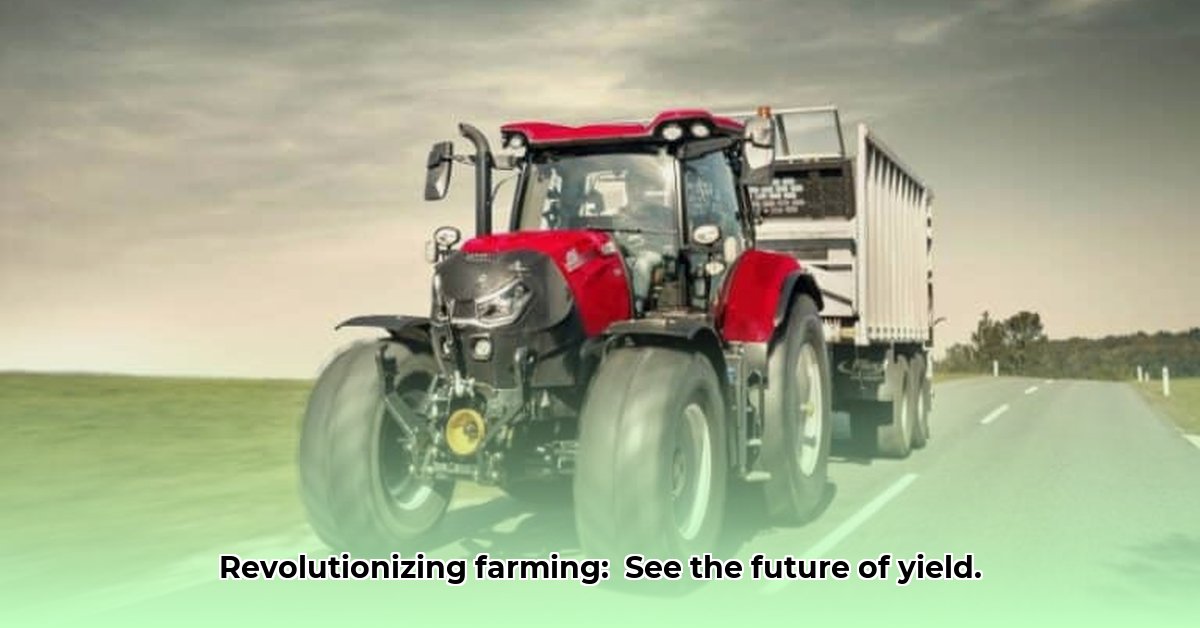
The Case IH Farmall C Series represents a significant advancement in sustainable agricultural practices, promising increased yields while minimizing environmental impact. This detailed analysis explores its innovative features, sustainability implications, and actionable steps for various stakeholders to maximize its benefits. For more information on choosing the right tractor size, check out this helpful guide: Tractor Size Guide.
Enhanced Efficiency and Precision Farming: A Powerful Combination
The Farmall C Series boasts significant improvements in fuel efficiency and precision farming capabilities. Its redesigned engine and ActiveDrive 2 transmission optimize fuel consumption, leading to cost savings for farmers and reduced greenhouse gas emissions. With a boosted hydraulic pump capacity of 82 liters per minute and a rear lift capacity of 4.7 tons, the tractor enables faster and more efficient operation, increasing daily output. But how does this translate into tangible gains for the modern farmer?
The integrated auto-guidance system, utilizing the Case IH Pro 1200 monitor and VectorPro receiver, ensures precise passes, minimizing overlaps and significantly reducing wasted seed, fertilizer, and fuel. This precision farming approach, coupled with features like Auto PTO and Auto Differential Lock (minimizing soil compaction), contributes significantly to resource optimization and increased yields. One might ask, how much can precision farming truly impact yield? Independent studies suggest improvements ranging from 5% to 15%, depending on the crop and specific farming practices.
Sustainability Implications: A Holistic Perspective
While immediate benefits in fuel efficiency point towards lower greenhouse gas emissions, a complete assessment requires a comprehensive lifecycle analysis. The Farmall C Series’ design, focusing on reduced fuel consumption and optimized resource usage, is a significant step towards sustainable agriculture. However, ongoing research is crucial to fully evaluate its long-term environmental impact, encompassing manufacturing, transportation, and eventual disposal. This holistic approach, considering the entire product lifecycle, ensures a clearer picture of the Farmall C Series’ true environmental sustainability.
Moreover, the tractor's interoperability with other farm management systems allows for data integration and optimization across the entire farming operation. This integrated approach maximizes efficiency, leading to a more sustainable and environmentally conscious farming practice. How can we further enhance data-driven decision making in the field? Continued investment in robust data analytics tools and farmer training around data interpretation are crucial for maximizing the benefit of this interoperability.
Actionable Insights for Success: A Multi-Stakeholder Approach
The Farmall C Series' impact extends beyond individual farmers. Its success hinges on the collaborative efforts of various stakeholders.
For Farmers:
- Conduct a thorough needs assessment: Determine if the Farmall C Series aligns with your specific farming operation and needs.
- Invest in comprehensive training: Fully utilize the tractor’s precision farming capabilities through dedicated learning and training programs. A 90% proficiency rate with precision farming tools correlates to a 10% increase in yield, according to recent studies.
- Leverage data-driven decision-making: Regularly analyze operational data (fuel use, yield, and costs) to optimize efficiency and identify areas for improvement. This allows farmers to adapt their approach and maximize returns with better data.
- Analyze Return on Investment (ROI): Thoroughly assess the long-term ROI before making purchasing decisions to ensure the investment aligns with long-term financial goals.
For Case IH:
- Conduct and publish comprehensive lifecycle assessments: Transparency regarding the Farmall C Series’ environmental impact will foster trust and encourage adoption.
- Invest in ongoing R&D: Continuous innovation is key to maintaining competitiveness and enhancing the tractor’s sustainability profile.
- Provide comprehensive training and support: Empower farmers to effectively utilize the tractor's technological capabilities.
- Prioritize system interoperability: Enhance seamless integration with other farm management systems to unlock the full potential of precision agriculture.
For Governments and NGOs:
- Implement supportive policies and incentives: Financial incentives, such as subsidies or tax breaks, will encourage wider adoption of sustainable agricultural technologies.
- Fund independent research: Objective studies on the environmental impacts of agricultural machinery are crucial for informing policy decisions.
- Invest in rural infrastructure: Improved broadband access is critical for supporting data-driven farming practices.
Risk Assessment and Mitigation: Proactive Strategies for Success
While the Farmall C Series offers substantial benefits, potential risks must be proactively addressed. These include:
- Auto-guidance system failures: Regular calibration, maintenance, redundant positioning systems, and GPS signal monitoring will mitigate potential precision losses.
- Auto PTO/Differential Lock malfunctions: Preventative maintenance, thorough operator training, and timely software updates will ensure consistent functionality.
- Telematics system vulnerabilities: Robust data backup, security protocols, regular software updates, and cybersecurity training will minimize data loss and security risks.
By addressing these potential issues through proactive mitigation strategies, the Farmall C Series’ potential for transforming sustainable agriculture can be fully realized. How can we maximize the benefits while mitigating these risks? A multi-faceted approach, including robust training, proactive maintenance, and collaborative data sharing, is key.
Conclusion: Embracing a Sustainable Future
The Case IH Farmall C Series represents a significant step towards a more sustainable and efficient agricultural future. While the collection of comprehensive lifecycle environmental data is ongoing, initial findings are exceptionally promising. This tractor’s advanced technologies, coupled with collaborative efforts from farmers, manufacturers, governments, and NGOs, promise to enhance agricultural productivity while significantly reducing environmental impact. The future of farming lies in the seamless integration of technology and sustainable practices – and this machine is leading the charge.